

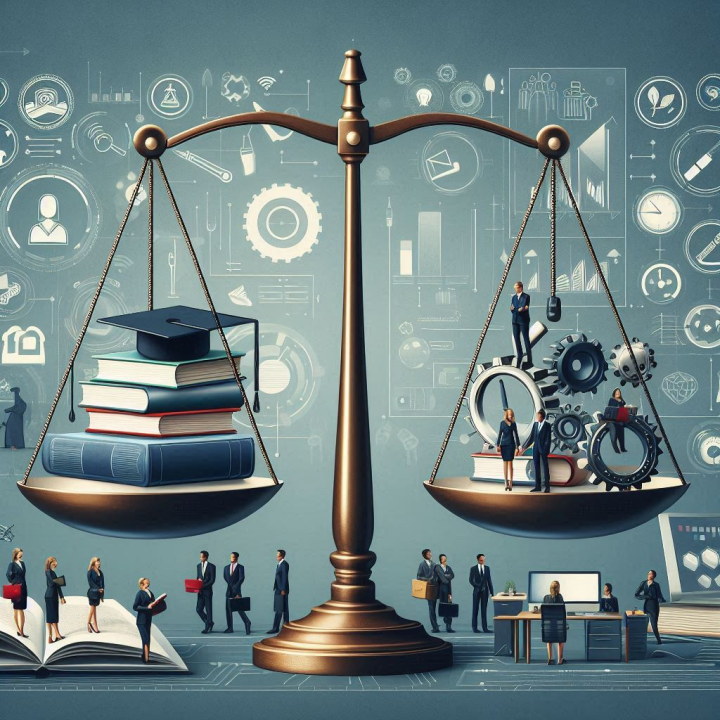
There was a time when the path felt straightforward—study hard, get a degree, land a job. Simple, almost linear. But somewhere along the way, that neat little formula started to crack. Not collapse entirely, but bend enough to make people question it.
Now, if you sit with a group of students or young professionals, the conversation sounds different. Less certainty, more curiosity. And often, a quiet tension between two approaches—traditional degrees and practical skills.
The Weight of a Degree
Let’s not dismiss it outright. A degree still carries weight. It opens doors, especially in fields like medicine, law, or engineering where structured learning isn’t optional—it’s essential.
There’s also something valuable about the experience itself. College isn’t just about textbooks. It’s about exposure, conversations, learning how to think critically. You meet people from different backgrounds, you get challenged, you grow in ways that aren’t always measurable.
But here’s the thing—it’s also expensive. And time-consuming. And sometimes, not entirely aligned with what the job market actually demands.
When Skills Start to Speak Louder
On the other side, there’s a growing emphasis on what you can actually do. Not what’s written on your certificate, but what you can build, solve, create.
This is where Skill-Based Learning begins to shine. It’s focused, practical, and often faster. You learn coding by coding. You learn design by designing. No long detours, no unnecessary theory—just straight into the work.
And employers? Many of them are starting to notice. A strong portfolio or real-world experience can sometimes outweigh a formal qualification.
It’s not universal, of course. But the shift is happening.
The Real Question Isn’t So Simple
At first glance, it feels like a debate—Degree-Based Education versus skills. Almost like you have to pick a side.
But when you look closer, it’s not that black and white.
Degrees provide structure. Skills provide application.
Degrees give you a foundation. Skills help you build on it.
So asking which one is better might be missing the point. It’s more about what you need, where you are, and what you’re aiming for.
The Changing Job Market
If you scroll through job listings today, you’ll notice something interesting. Many roles no longer demand strict degrees. Instead, they ask for “experience” or “demonstrated ability.”
That’s a big shift.
Companies, especially in tech, marketing, and creative fields, care about output. Can you deliver? Can you adapt? Can you learn quickly?
This doesn’t mean degrees are irrelevant. It just means they’re no longer the only ticket in.
And for a lot of people, that’s both freeing and confusing.
Learning Feels Different Now
The way we learn has changed too. Online platforms, short courses, bootcamps—they’ve made education more accessible. You can pick up a new skill in months, sometimes weeks.
But that flexibility comes with its own challenge: discipline. Without a structured system, it’s easy to drift. To start something and not finish it.
That’s where traditional education still has an edge—it forces consistency. It gives you a roadmap, even if it’s not perfect.
So… Kya Better Hai?
It’s tempting to look for a clear winner in this debate—Skill-Based Learning vs Degree-Based Education: Kya better hai? But honestly, the answer depends on context.
If you’re entering a regulated profession, a degree is non-negotiable.
If you’re exploring creative or tech-driven paths, skills might get you there faster.
And for many people, the best route is somewhere in between. A degree for foundational knowledge, paired with continuous skill-building to stay relevant.
It’s not either/or anymore. It’s both, in the right balance.
The Human Side of It All
There’s also something we don’t talk about enough—confidence. A degree can give you a sense of legitimacy. A structured path that reassures you you’re “on track.”
Skills, on the other hand, build confidence through action. You prove to yourself that you can actually do the thing, not just understand it.
Both forms of confidence matter. And both take time to develop.
A More Flexible Future
If there’s one clear trend, it’s this: education is becoming more flexible. Less rigid. More personalized.
People are mixing and matching—degrees, certifications, self-learning, internships. Creating their own paths instead of following a predefined one.
And maybe that’s the real evolution here.
A Thought to Carry Forward
At the end of the day, education isn’t just about degrees or skills. It’s about growth. About becoming capable, adaptable, and curious enough to keep learning.
Because the world isn’t static. What works today might not work tomorrow.
So instead of asking which path is better, maybe the better question is—are you learning in a way that actually moves you forward?
If the answer is yes, you’re probably on the right track.

