

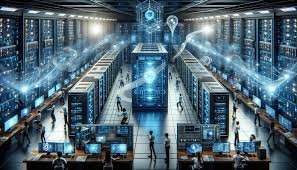
There was a time when “the cloud” felt like this distant, almost magical place where everything lived—your files, your apps, your backups. You sent something up, it came back when you needed it. Simple.
But lately, something subtle has been shifting. Not replacing the cloud, exactly, but… complementing it. Data isn’t always traveling far anymore. Sometimes, it’s being processed right where it’s created—on your phone, your car, even a factory machine humming in the background.
And that shift? It’s more important than it sounds.
The Comfort of the Cloud
Let’s start with what we know.
Cloud computing changed everything. It made storage and processing scalable, flexible, and—most importantly—accessible. You didn’t need expensive infrastructure anymore. You could just rent computing power as needed.
That’s why businesses love it. Startups, especially. You can launch something big without owning a single server.
And for everyday users? It’s seamless. Your photos sync, your emails load, your apps just… work.
This is the foundation most of us rely on without even thinking about it.
When Distance Starts to Matter
But here’s the catch—cloud computing depends on data traveling back and forth. From your device to a remote server, then back again.
Most of the time, that’s fine.
But not always.
Think about self-driving cars, or real-time gaming, or industrial machines that need instant responses. Even a tiny delay—a fraction of a second—can matter.
And that’s where things start to get interesting.
Enter Edge Computing
Instead of sending everything to a distant server, edge computing processes data closer to the source. Sometimes right on the device itself, sometimes on a nearby local server.
So instead of this long round trip, decisions happen almost instantly.
That’s the core idea behind Edge Computing vs Cloud Computing—not a competition, but a difference in how and where data is handled.
Edge doesn’t replace the cloud. It just brings computing closer to where it’s needed most.
Why Speed Isn’t the Only Factor
Latency (that tiny delay) is a big reason edge computing is gaining traction. But it’s not the only one.
There’s also bandwidth. Sending massive amounts of data to the cloud constantly can be expensive and inefficient. Processing some of it locally reduces that load.
And then there’s privacy.
Sensitive data—like health information or personal identifiers—doesn’t always need to travel far. Keeping it closer can reduce exposure and risk.
So it’s not just about speed. It’s about control.
Real-World Use Cases That Make It Click
Sometimes these concepts feel abstract until you see them in action.
Take smart homes. Your security camera doesn’t need to send every second of footage to the cloud. It can analyze movement locally and only upload important clips.
Or consider manufacturing. Machines on a factory floor can detect faults instantly using edge processing, preventing downtime without waiting for cloud analysis.
Even in healthcare, wearable devices can monitor vital signs in real time and alert users immediately—no lag, no delay.
This is where the practical side of Difference aur use cases becomes clear. It’s not about one being better than the other—it’s about using the right approach for the right situation.
The Hybrid Reality
If you’re expecting a clear winner here, you might be disappointed.
Because the future isn’t edge or cloud—it’s both.
Edge handles real-time processing and immediate decisions. The cloud handles heavy computation, long-term storage, and large-scale analytics.
They work together.
Data might be processed locally first, then sent to the cloud for deeper insights later. It’s a layered system, not a binary choice.
Challenges That Come With the Shift
Of course, moving computation closer to devices introduces its own complexities.
Managing multiple edge devices can be tricky. Security needs to be handled carefully across different points. Updates, maintenance, consistency—it all requires planning.
And while edge reduces some costs, it can introduce others.
So while the benefits are clear, implementation isn’t always straightforward.
What This Means for Everyday Users
You might not notice edge computing directly, but you’ll feel its impact.
Faster app responses. Smarter devices. More reliable systems.
Things just work a bit smoother, a bit quicker.
And over time, that adds up.
A Thought to Wrap It Up
Technology often evolves in quiet ways. Not with big announcements, but with small improvements that gradually change how things function.
Edge computing is one of those shifts.
It’s not replacing the cloud—it’s reshaping how we use it. Bringing computation closer, making systems more responsive, more efficient, maybe even a bit more personal.
And if you think about it, that direction makes sense.
Because the closer technology gets to us—literally and figuratively—the more natural it begins to feel.

