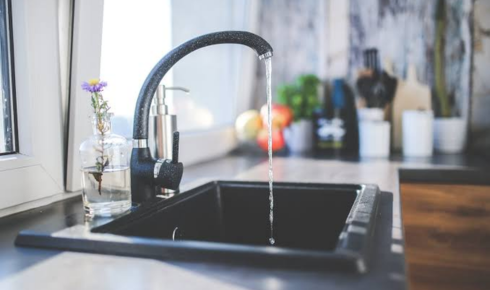
Hard water is one of those household problems that tends to creep up slowly. You don’t wake up one morning and suddenly declare war on calcium deposits. Instead, you notice little things: white marks around the faucet, cloudy glasses, a showerhead that doesn’t spray quite like it used to.
Then one day you’re scrubbing the same stubborn buildup for what feels like the hundredth time and think, There has to be a better way.
Related analysis: Why the Right Water Softener Can Make Everyday Life at Home Easier
There often is. Understanding your water hardness and choosing a treatment system that matches your home’s needs can make a real difference. The trick isn’t buying the biggest system or the newest gadget. It’s choosing the right technology for your water.
What Makes Water “Hard”?
Hard water contains dissolved minerals, primarily calcium and magnesium. These minerals are naturally picked up as groundwater moves through soil and rock.
Related analysis: Why Softer Water Makes Home Life Feel Just a Little Easier
For many people, hard water isn’t a major health concern. The bigger issue is what those minerals can do around the house.
They can form scale on faucets, shower doors, appliances, and plumbing components. Soap may also behave differently, leaving behind residue and making cleaning feel like more work than it should be.
Related analysis: Better Water at Home Starts With the Right System, Not a Guess
The severity of the problem varies considerably, which is why knowing your water hardness levels is useful before purchasing treatment equipment.
Why Testing Comes Before Shopping
It’s tempting to search online, compare a few systems, and pick one with impressive specifications. But water treatment isn’t really a one-size-fits-all business.
A water test can tell you how hard your water is and whether other characteristics might affect treatment. Depending on the source, testing may also examine iron, manganese, pH, chlorine, sediment, bacteria, or other parameters.
Related analysis: Choosing the Right Water Purification Approach for a Healthier Home
This information helps you understand whether you need a softener, conditioner, filtration system, or perhaps a combination.
Think of it like getting the right size shoes. The fanciest pair in the store won’t help if they don’t fit.
Related analysis: A Warmer, Smarter Home Starts With the Right Heating Choices
How Ion-Exchange Technology Works
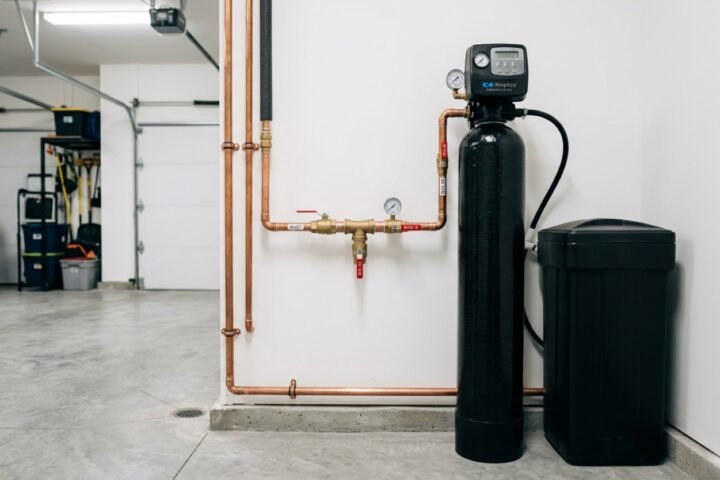
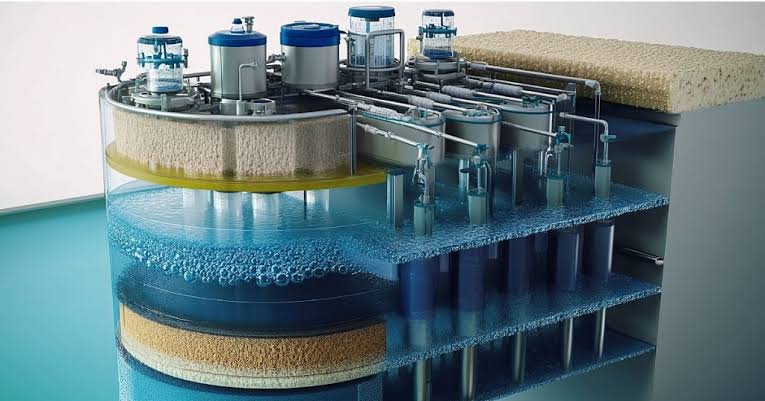
Traditional water softeners use ion exchange to reduce hardness minerals. Water passes through a resin bed, where calcium and magnesium are exchanged for sodium or potassium ions.
Modern systems can make this process quite efficient. Some use advanced ion-exchange technology to improve regeneration cycles, monitor water usage, and reduce unnecessary consumption of salt and water.
The exact design varies between manufacturers, so it’s worth looking beyond the phrase “advanced.” Ask what the technology actually does and how the system manages regeneration.
A good system should be sized for your household rather than simply installed because it happens to be popular.
What You May Notice After Treatment
One of the nice things about reducing hard water is that the benefits tend to appear in ordinary places.
Glassware may come out of the dishwasher with fewer spots. Faucets can stay cleaner. Soap may lather more easily, and shower surfaces may require less aggressive scrubbing.
Laundry can also feel different. Hardness minerals can interfere with detergent performance, so reducing them may help clothes rinse more effectively.
Then there are the appliances.
Water heaters, coffee makers, dishwashers, and other water-using equipment can accumulate mineral scale. Managing hardness may help reduce those deposits and support more consistent operation.
No system eliminates every maintenance task, of course. But fewer deposits can certainly make maintenance less of a chore.
Why System Size Matters
A water softener isn’t something you should size by guessing.
Household size, daily water consumption, incoming hardness, and regeneration settings all influence the appropriate capacity.
An undersized system may regenerate too often, while a system that’s far larger than necessary can cost more upfront and may not operate as efficiently as you’d expect.
This is where professional assessment can be useful. A knowledgeable installer can consider both water conditions and household usage before recommending equipment.
It’s a small detail, but getting the size right can make a surprisingly big difference over the life of the system.
Customized Treatment for Different Homes
Every property has its own combination of plumbing, water usage, and water quality.
A small apartment may have very different needs from a large family home. A private well may present different challenges from municipal water. Even two neighboring houses can have different plumbing and water-quality concerns.
That’s why Customized System Design can be valuable.
Instead of treating every customer with the same equipment, a customized approach considers water test results, household demand, available installation space, and personal priorities.
For one homeowner, a traditional softener may be enough. Another may need softening combined with drinking-water filtration. Someone else might mainly want scale control without using salt.
The goal is to solve the actual problem, not sell equipment for the sake of selling it.
What About Salt-Free Conditioners?
Salt-free water conditioners are often discussed as an alternative to conventional softeners.
The important distinction is that many salt-free systems don’t remove calcium and magnesium from the water. Instead, they are designed to reduce the tendency of minerals to form scale.
That can be attractive to homeowners who want to avoid salt, brine discharge, or regular salt handling.
But if your goal is genuinely reducing water hardness, you should understand the difference between conditioning and softening before making a purchase.
Neither option is automatically right for every home.
Don’t Forget Maintenance
Even high-quality water treatment equipment requires maintenance.
Salt-based softeners need salt replenishment. Resin systems may require periodic servicing. Filters need replacement, and control settings may occasionally need adjustment.
Ask about these responsibilities before buying.
Find out how often components need attention, how much replacements cost, and whether service technicians are available if something goes wrong.
A system that looks inexpensive initially may not remain inexpensive if maintenance is difficult or replacement parts are costly.
Look Beyond the Marketing
Water-treatment advertisements can make almost any system sound revolutionary.
Instead of focusing only on phrases like “premium,” “smart,” or “advanced,” ask practical questions.
What does the system remove or reduce? What does it not remove? What water conditions is it designed for? How much water and salt does it use during regeneration? What happens when the power goes out?
Clear answers are usually more valuable than impressive slogans.
Making the Right Choice
Good water treatment begins with understanding rather than guesswork.
Test the water. Learn your hardness level. Consider how much water your household uses. Decide what problems you actually want to solve, and then compare technologies based on performance, maintenance, installation, and long-term cost.
Hard water may never become your favorite household topic, and that’s perfectly fine. You don’t need to become a water-treatment expert.
You just need enough information to make a sensible decision.
Once the right system is installed and properly maintained, the difference can be pleasantly ordinary: fewer mineral stains, cleaner fixtures, easier laundry, and appliances that aren’t constantly battling scale.
Sometimes the best home improvements are the ones you barely notice—because everything simply works a little better.